Indiana Snake Laws: What You Can and Can’t Do With a Wild Snake
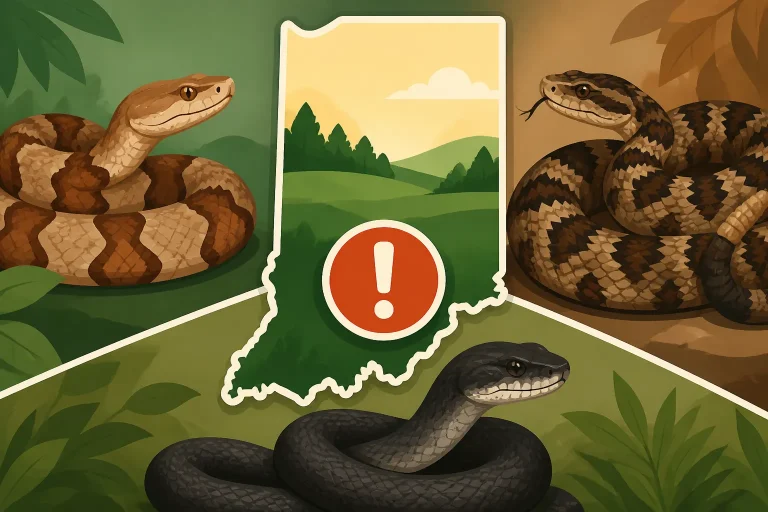
A wild snake in the yard, on a trail, or inside a building can raise an immediate question: may you pick it up, move it, keep it, or remove it? Indiana’s rules distinguish an encounter from collecting or possessing wildlife. The key practical point is to avoid taking a snake home or relocating it until you have checked the rules that apply.
What Indiana’s snake laws cover
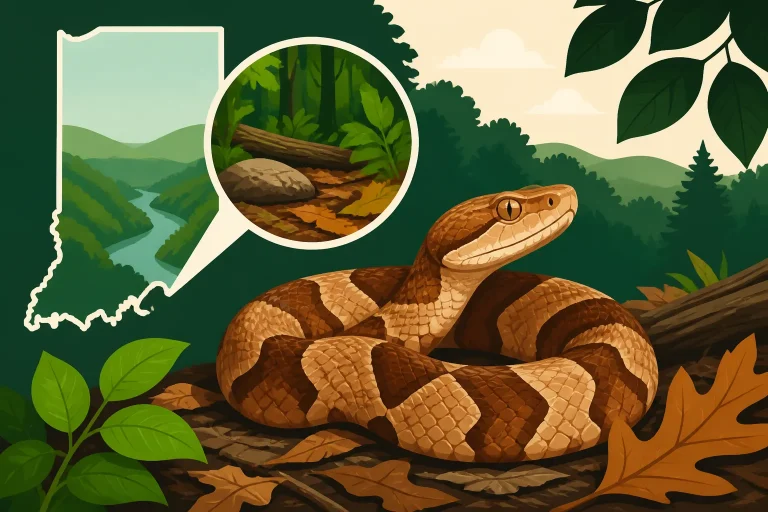
Indiana’s wildlife rules matter whether a snake is found on public or private property. A yard, farm, park, and trail may feel like very different settings, but the place alone does not answer whether you may collect or keep a wild snake.
The Indiana Department of Natural Resources, Division of State Parks describes the statute as directing the Division of Fish & Wildlife to provide for the protection, reproduction, care, management, survival and regulation of wild animal populations regardless of whether the wild animals are present on public or private property. That broad responsibility is a reason not to assume that finding a snake on private land makes it yours to take.
It helps to distinguish several actions that people may group together as “dealing with” a snake:
- Seeing a snake: Noticing a snake in its habitat is different from collecting or possessing it.
- Handling or capturing it: Picking it up, putting it in a container, or otherwise taking it into your control can raise questions about collection and possession.
- Moving it: Relocating a snake is not automatically the same as leaving it where it is. Check the rules before attempting it.
- Keeping it: Possessing a wild snake is a separate legal concern from briefly seeing it or photographing it.
- Removing a snake from a property: The appropriate response can depend on the animal, the location, and the rules that apply. Do not assume that a homeowner can take any action simply because the snake is on their property.
This distinction is useful because the law is not a simple “snakes are always protected” or “snakes can always be removed from private land” rule. The available rules include limits on collecting nongame reptiles and amphibians, a restriction on collection at state parks, and a requirement concerning possession of wild animals. Those rules address different actions and should not be treated as interchangeable.
A sensible default is to give an unidentified snake space and avoid touching it. If you need help identifying it or deciding how to respond, consult the appropriate wildlife agency or a qualified professional. For immediate practical steps around a house or yard, see Found a Snake in Your Indiana Yard or House? Start Here. To understand how common species differ, see Snakes in Indiana: Native Species From Garter Snakes to Copperheads.
When a license is required to collect a snake
Indiana’s collection rule applies to nongame reptiles and amphibians. A snake that falls within that category should not be collected on the assumption that a small animal, a harmless-looking animal, or an animal found on private land is exempt.
The Indiana Department of Natural Resources, Division of State Parks says collecting Indiana nongame reptiles or amphibians is not allowed without a valid fishing or hunting license. This is a rule about collection; it should not be mistaken for permission to take any snake once a license is held.
The same source says collection is restricted to four individuals from a defined list of species, even for someone with a valid license. The limit and the list matter: having a license does not mean a person may collect any species or as many individuals as they wish. Before taking action, check the current official information to confirm whether the species is on the list and whether the proposed collection fits the rules.
The exact meaning of “collecting” may not be obvious in a moment of surprise. If you catch a snake and put it in a bucket, bag, or other container, you have gone beyond simply observing it. Photographing it from a safe distance, watching it pass, or stepping back does not involve taking it into your possession. If you are uncertain whether a planned action counts as collection, do not proceed until you have checked with the agency responsible for the rules.
A license also does not settle every other legal question. It does not cancel the state-park restriction, and it does not by itself establish that a person may keep a wild animal. Check the rule for the particular activity rather than treating a license as a general wildlife permit.
If your interest is learning to identify snakes rather than collecting them, a distant photo may be a better option than capture. Photographing a Snake for an ID Without Getting Close in Indiana covers ways to document useful features without handling the animal. For a focused look at collecting rules and limits, see Collecting a Wild Snake in Indiana: Licenses, Limits and Parks.
State parks have a separate collection restriction
The collection rule for Indiana state park properties is more restrictive than the general license requirement. The Indiana Department of Natural Resources, Division of State Parks says collecting is not permitted on state park properties, even with a valid license.
That means a person should not treat a fishing or hunting license as permission to collect a snake in a state park. The restriction is specific to collecting reptiles or amphibians on state park properties; it is not a reason to assume that every interaction with a snake is legally identical. Observe from a distance, leave the animal where it is, and follow posted property rules.
The distinction can be easy to miss because a visitor may have a valid license and may be familiar with collection rules that apply elsewhere. The park restriction still applies. A license that is relevant in another setting does not override a rule that prohibits collection on state park property.
If a snake is near a campsite, trail, or building, do not try to catch it for a closer look or move it as a souvenir or specimen. Give it room and allow it to leave. If it creates a specific concern for safety or access, use the official park or agency contact information to ask how that situation should be handled. Do not assume that the park staff will authorize collection or that a private operator can disregard the property rule.
Parks also make identification by appearance especially tempting: a visitor may want to approach for a better view or photograph. That is unnecessary. Do not handle or corner an unknown snake. If you cannot identify it from a distance, keep your space and seek advice from a qualified source. Snakes Around Indiana State Parks: Campgrounds, Logs and Lakes offers more context about encounters in park settings, while No Collecting in Indiana State Parks, Even With a License focuses on the collection restriction.
Possession is different from seeing or collecting
A wild snake does not become a lawful pet just because someone has found it, caught it, or moved it away from a problem area. Collection and possession are related, but they are not the same legal question. A person may need to consider both before taking a wild animal into their control.
The Indiana Department of Natural Resources states: It is unlawful for an individual to possess a wild animal without a proper permit. The key phrase is “proper permit”: do not assume that an ordinary fishing or hunting license is the permit required to possess a wild animal. The agency’s information should be checked for the specific animal and activity.
This rule is particularly important when someone wants to keep a snake after finding it outdoors. A makeshift enclosure, a short drive, or an intention to release it later does not answer whether possession is allowed. Nor does finding the snake on private property by itself establish that you may keep it. Before taking a wild snake home or holding it for any length of time, confirm the relevant requirements with the Indiana Department of Natural Resources.
If the snake is already inside a container or building, avoid adding further handling while you look for help. Keep people and pets away from it, do not transport it casually, and ask an appropriate professional or agency what to do next. If you are unsure what species it is, keep your distance rather than relying on appearance to decide that it is safe to handle.
The rules for keeping wildlife can also differ from the rules for collecting it. For example, a license may address whether a person can collect certain nongame reptiles or amphibians, while possession has its own permit requirement. Check both questions rather than assuming that permission for one action covers the other. For more on the possession issue, see Keeping a Snake You Found: Indiana’s Wild Animal Possession Rule.
What to do when a snake turns up at home
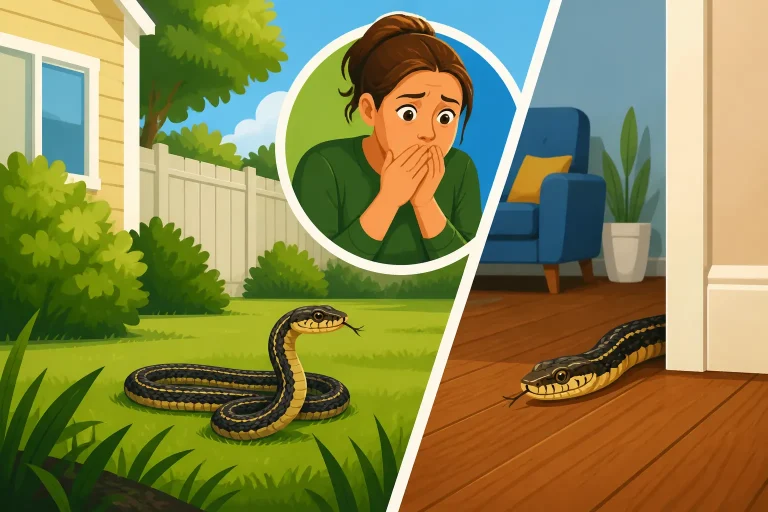
A snake sighting does not automatically require capture or removal. Often, the most useful first step is to give the animal space and let it move away without interference. Trying to catch it can turn a brief encounter into a close one, and it may also create legal questions about collection or possession.
Use a practical sequence:
- Keep your distance. Do not pick up, corner, poke, or handle an unknown snake.
- Move people and pets away. Give the animal an open route to leave if one is available, without blocking it or trying to herd it by hand.
- Avoid capturing it for identification. A photo taken from a safe distance may be useful, but do not approach to improve the image.
- Consider the setting. A snake in a state park is subject to the park’s no-collection rule, even if you hold a valid license. A snake on private property is not automatically free to collect or keep.
- Ask for qualified guidance if needed. If the snake is inside a building, cannot leave safely, or presents a genuine concern, consult the appropriate wildlife agency or a qualified wildlife control professional. Use official channels to find current contact details.
- Do not keep or relocate it without checking first. Rules about collection and possession do not automatically authorize a move.
Avoid treating color or body shape as proof that a snake is harmless. Many species can be confused, and a quick glance is not a reliable reason to handle an animal. If you cannot identify it confidently from a distance, leave it alone and contact someone qualified to help.
The right response can differ according to where the snake is and what it is doing. A snake passing through a yard may not need intervention. One inside a room may require help to get it out without handling it. A snake in a public park should be left undisturbed, with any concern directed to park or wildlife personnel. In each case, restraint avoids unnecessary risk and helps prevent an encounter from becoming an unlawful collection or possession.
For a snake inside the house, Snake Loose Inside the House: Calm Steps for Indiana Homeowners provides situation-specific advice. If an operator may be needed, Hiring a Wildlife Control Operator for a Snake in Indiana explains what to consider before arranging help.
Moving, relocating, or removing a wild snake
People often want to move a snake because it is near a doorway, a play area, a pet, or a path. The impulse is understandable, but a move is not automatically a safe or legally permitted solution. Catching the animal to relocate it may involve collection or possession, and the location where it was found can affect which rules apply.
The facts provided for Indiana establish that collecting certain nongame reptiles and amphibians requires a valid fishing or hunting license, that collection is restricted even with a license, and that collection is not permitted on state park properties. They also state that an individual may not possess a wild animal without a proper permit. Those rules are enough to show why someone should not improvise a capture-and-release plan.
Do not interpret the absence of a detailed relocation instruction as permission to move a snake. Nor should you assume that a short-term hold is legally different from possession. If the animal must be moved for safety, ask the relevant agency or a qualified professional about the lawful option before attempting to trap it yourself.
There is also a practical trade-off. A person who tries to grab or pin down an unknown snake needs to get close, which increases the chance of a bite. The attempt can injure the animal as well. Leaving an exit route, keeping bystanders away, and getting qualified help when necessary are generally more sensible than attempting a hands-on removal.
A professional may be able to advise what is appropriate for the particular animal and setting. Check credentials and ask what the operator proposes to do before agreeing to work. Do not assume that every service uses the same approach or that hiring a service changes the legal rules. For the legal context around permits and removal, see Indiana’s Nuisance Wild Animal Control Permit and Where Snakes Fit. For help choosing a service, see Who to Contact About a Protected Snake or Snake Removal in Indiana.
Common assumptions that can lead to trouble
“It’s on my property, so I can keep it”
Private property does not automatically settle the question. Indiana’s statute assigns the Division of Fish & Wildlife responsibility for regulating wild animal populations on public and private property, and the state separately says that possessing a wild animal without a proper permit is unlawful. Check the rules before taking a snake home.
“I have a fishing or hunting license, so I can collect any snake”
A license does not give blanket permission. The collection rule applies to a defined list of species and limits collection to four individuals. The state-park restriction also applies even when a person has a valid license. Check the species and location rules before collecting anything.
“I’ll only hold it briefly, then release it”
A short time in a container does not automatically resolve whether you have collected or possessed the snake. If you are not sure whether an action counts, do not capture it while trying to find out. Seek guidance first.
“I can move it to a nearby patch of woods”
Moving an animal can involve capturing and possessing it. Do not assume relocation is permitted simply because the goal is to put the snake somewhere that seems more suitable. Ask an appropriate agency or qualified professional about the lawful response.
“I can identify it by its color or the shape of its head”
Appearance alone is not a safe basis for handling an unknown snake. Several species can be mistaken for one another, and a misidentification can put a person at risk. Keep your distance and use a qualified identification resource instead. What Snake Is This? Identifying Snakes Around Indiana Homes and Venomous Snakes in Indiana: How to Recognize Each Species can help explain identification clues, but neither makes close handling a good idea.
“It’s on park land, but my license should cover it”
The Division of State Parks says collecting reptiles or amphibians is not permitted on state park properties, even with a valid license. Leave wildlife where it is and ask park personnel or the responsible agency for guidance if there is a problem.
Frequently Asked Questions
Can I pick up a wild snake in my Indiana yard?
Do not assume that you can. Collecting and possessing wildlife have separate legal considerations, and the animal’s presence on private property does not by itself grant permission to keep it. Leave it undisturbed and check with the Indiana Department of Natural Resources if you are considering taking action.
Does a fishing or hunting license let me collect any Indiana snake?
No. The state’s collection information limits collection to a defined list of species and restricts the number of individuals. State park properties also have a separate prohibition on collecting reptiles or amphibians.
Can I keep a snake I found if I plan to release it later?
Do not assume that temporary possession or a plan to release the snake removes the permit question. Confirm the rules with the Indiana Department of Natural Resources before taking a wild snake into your possession.
What should I do if I cannot identify the snake?
Keep your distance and do not handle it. If it is in a place where it creates a concern, ask a qualified professional or the appropriate wildlife agency for advice. Use official information to find current contact details.
Sources
- Indiana Department of Natural Resources, Division of State Parks (checked November 20, 2026)
- Indiana Department of Natural Resources — Fish and Wildlife: Orphaned & Injured Animals (checked November 20, 2026)
- Indiana Department of Natural Resources, Division of State Parks — Fish and Wildlife: About Us (checked November 20, 2026)
Disclaimer
This article is for general informational purposes only and does not constitute professional advice. Laws, prices and regulations vary by location and change over time. Consult a qualified professional for guidance on your specific situation. Indiana Critter Guide is not a government agency or pest control company and is not affiliated with any government agency.