Found a Snake in Your Indiana Yard or House? Start Here
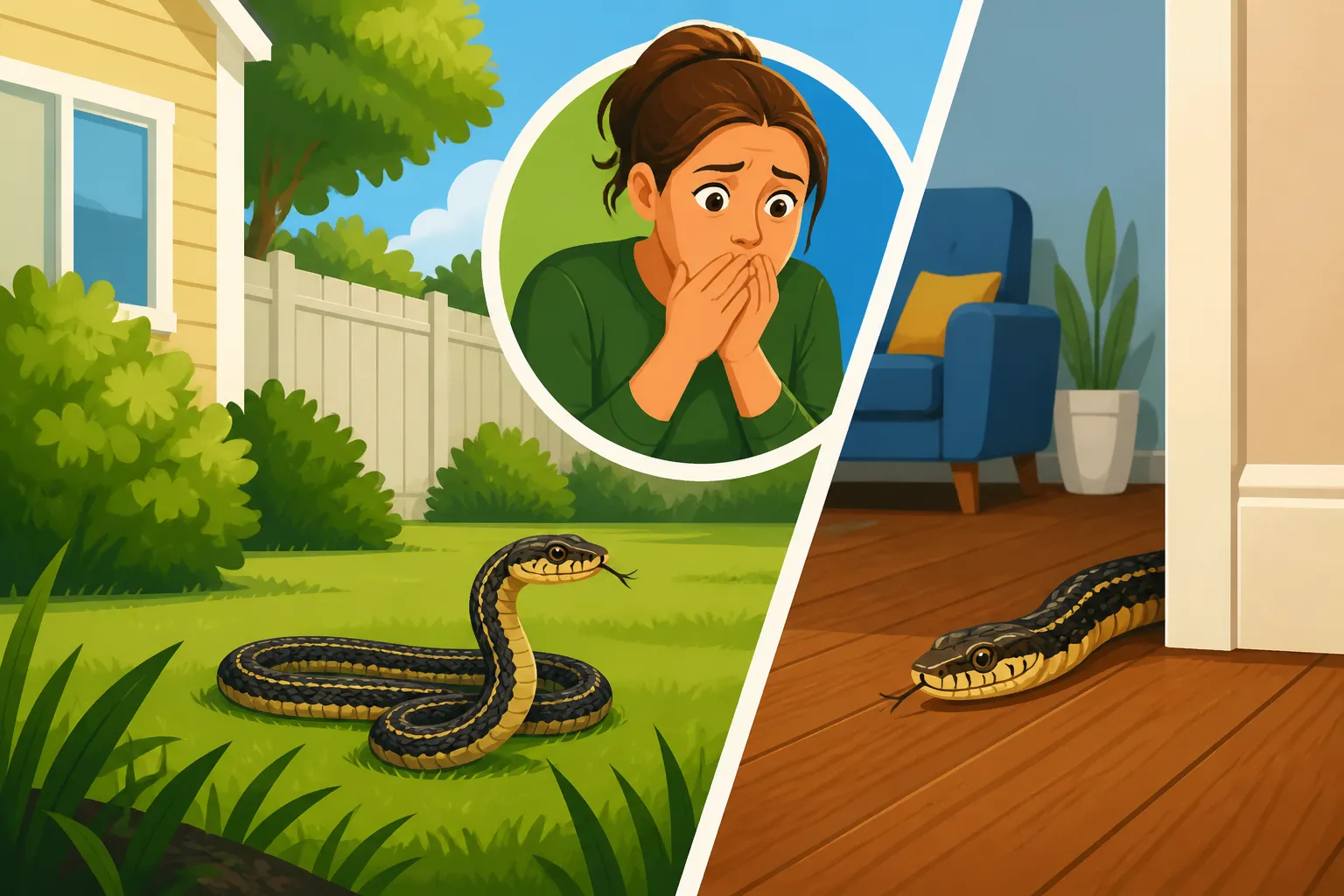
A snake in the yard can be unsettling; one inside the house can feel urgent. The safest first move is usually the same in either place: keep people and pets away, don’t touch or corner the snake, and decide whether it can leave undisturbed or needs professional removal. These steps help you respond calmly without taking unnecessary risks.
Start by creating distance
Pause before approaching, moving furniture, or trying to identify the snake. Keep children and pets away from the area, and don’t try to pick it up, pin it down, sweep it out, or kill it. Even a snake that appears still may move if disturbed, and appearance alone is not a reliable way to decide whether an unknown snake can be handled safely.
The Indiana Department of Natural Resources, Division of State Parks, puts it simply: If you leave a snake alone, it will leave you alone. That is a useful starting point, not a guarantee that a snake will disappear immediately. Give it room and avoid blocking the route it may take away from people.
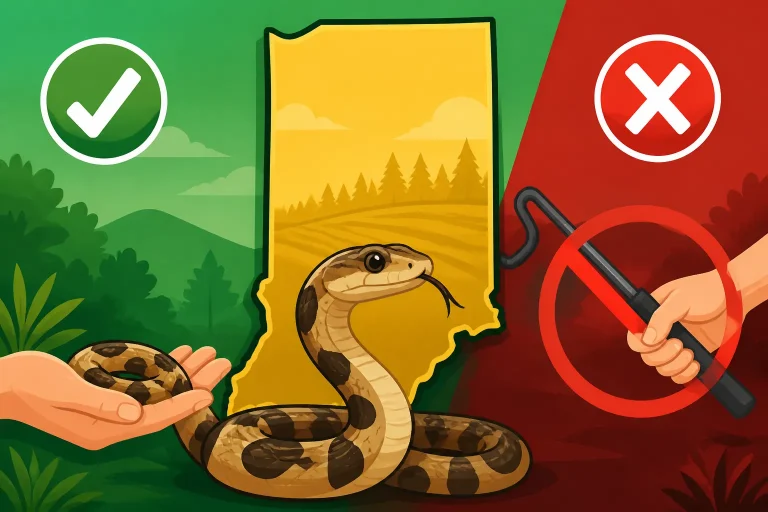
If the snake is outdoors, move back to a place where you can watch without standing near it. If it is indoors, don’t approach it to get a better look. When you can do so without going near the snake, keep others out of the room and close the door. If closing it would bring you close to the snake, step away instead. Don’t try to herd it toward an exit or trap it under a container.
If you can no longer see the snake, don’t assume it has left. Avoid reaching into places where it might have gone, such as a pile of stored items or an open closet. Keep people and pets out of the immediate area and ask a qualified professional what to do next. Snake Loose Inside the House: Calm Steps for Indiana Homeowners offers more room-by-room guidance for this situation.
A clear view from a safe distance can help a professional, but getting closer for a photograph is never worth the risk. If the snake is visible and you can take a picture without approaching, use the image only as a reference. Don’t try to capture it, turn it over, or put an object beside it for scale. Photographing a Snake for an ID Without Getting Close in Indiana explains how to make a photo more useful while keeping your distance.
| Situation | Safer first response | Avoid |
|---|---|---|
| Snake in an open part of the yard | Keep people and pets back; leave it room to move away | Chasing, cornering, handling, or killing it |
| Snake near a doorway or path | Use another route and keep others away from the area | Trying to push it aside or stepping close to pass |
| Snake inside a room | Keep people out; close the door only if you can do so without approaching | Reaching behind furniture or trying to catch it |
| Snake no longer visible indoors | Treat its location as unknown; keep the area clear and ask for professional advice | Searching by hand or moving stored items |
| Someone has been bitten | Call 911 or Poison Help at 1-800-222-1222 | Trying to catch or kill the snake |
The most useful immediate goal is not to decide what species it is. It is to prevent an encounter from becoming closer. People are more likely to get into trouble when they try to move a snake or accidentally step on one. The Indiana Department of Natural Resources, Division of State Parks, warns: Most snakebites are a result of someone trying to move a snake by accidentally stepping on one.
If the snake is in your yard
A snake in the yard is not automatically a problem that needs removal. If it is away from people and pets and has an open route to leave, give it space rather than trying to force it to move. Don’t walk toward it to make it flee, throw objects, spray it, or poke at it. Avoid cutting across its path; take another route and wait until the area is clear.
Think about how people use the yard. If the snake is near a door, play area, walkway, or place where someone must pass, keep people away from that section and use a different route. Let household members know where it was seen. If you can’t safely keep people away, or the snake is in a spot where it cannot be left undisturbed, contact a qualified professional rather than attempting removal yourself.
Pets should be kept away, too. Don’t let a dog investigate or try to chase a snake, and don’t carry a pet closer for a look. If the snake is near an outdoor pet area, keep the pet inside or use another area until the snake has moved on or a professional has advised you. For more on household precautions, see Copperheads, Dogs and Cats: Keeping Indiana Pets Safe From Snakes.
It can be helpful to notice where the snake was and what was nearby, as long as you can do so from a safe place. A broad description such as “beside the shed” or “near the garden path” can help you explain the situation to a professional. Don’t walk around searching for it or turn over objects to look for a hiding place. If it disappears into vegetation or a gap, leave that spot alone.
If the snake is simply passing through, avoid turning a brief sighting into a close encounter. You don’t need to follow it across the yard. You also don’t need to know its exact species before deciding to give it distance. If you aren’t sure what kind it is, keep away and contact a professional or the wildlife agency for advice.
For a snake that repeatedly appears in a particular part of the property, focus first on how people can avoid it. Keep the area visible and accessible for inspection from a safe distance, and avoid placing hands into dense plants or piles of materials where you cannot see. If you’re making changes around the home, work carefully and look before reaching into concealed spaces. Woodpiles, Rock Piles and Tall Grass: Snake Hiding Spots at Home covers common places around a property where people may be surprised by a snake.
A sighting does not mean you should use a repellent or chemical treatment. If you are considering any pest-control product, read and follow its label, including instructions for children and pets. Do not use a product in a way the label does not allow. Snake Repellents in Indiana: Do They Work, and What the Label Says discusses how to evaluate those products without treating an unknown snake as something to handle.
If the snake is inside your house
An indoor snake can be hard to locate once it moves out of view. Resist the urge to search under furniture, pull belongings from closets, or reach into a gap. Those actions can bring your hands close to a snake you cannot see. Keep children and pets away, and don’t let anyone enter the room to look for it.
If you can leave the room without passing near the snake, do so. Close the door only if you can do that without approaching or cornering it. If a door is not between you and the snake, don’t risk getting closer to create a barrier. Instead, move to a safe area and keep others out of the room or nearby space. Avoid blocking an exit route if the snake is visible and can move away from you.
If the snake is visible, remember where it is from a safe distance. If it disappears, tell anyone who may enter the room that it was seen there and is no longer in view. Don’t move a sofa, appliance, box, or other item to uncover it. Don’t assume it has gone outside just because you cannot see it.
A snake indoors is a reasonable time to seek professional advice, especially if you cannot keep people away, it has disappeared into an inaccessible area, or you need the animal removed. Indiana DNR does not provide removal or capture services for wildlife. The Indiana Department of Natural Resources says a person can contact a qualified Wildlife or Waterfowl Control Operator for wildlife removal. The operator can explain what services are available and what information would help assess the situation.
When you contact an operator, describe where the snake was seen and whether it is still visible. Mention any access concerns, such as a crowded room or an area that cannot be closed off safely. Don’t handle the snake or try to put it in a container while waiting. If you have a photo taken from a safe distance, you can ask whether it would be useful. You can find more about hiring help in Hiring a Wildlife Control Operator for a Snake in Indiana.
If you rent, tell the landlord or property manager that a snake was seen inside, particularly if it may have entered through a gap that needs attention. That does not replace keeping people away from the area or arranging professional help if needed. Don’t attempt repairs around a snake’s suspected hiding place. Wait until the animal’s location has been addressed and the area can be checked safely.
After the immediate situation is resolved, it may be worth checking how the snake got inside. Look for possible openings from outside when there is no snake in the area and you can inspect without reaching into concealed spaces. If you find a gap, consider having it repaired appropriately. Finding How a Snake Got Into the Garage and Sealing Foundation Gaps So Snakes Can’t Slip Into the Basement provide more focused advice for those entry points.
How to think about identification
Many people want to know what kind of snake they saw before they decide what to do. That’s understandable, but identification should not be a reason to approach it. Don’t use head shape, color, pattern, or apparent size as permission to get closer or touch it. A snake that cannot be confidently identified should be treated as unknown: keep your distance and contact a professional or the wildlife agency if advice is needed.
A photograph may help, but it is optional. Take one only if you already have a clear view and can remain well back. Don’t follow the snake to improve the angle, move an object to expose it, or try to make it hold still. If a picture isn’t possible, a short description of the location and what you noticed is enough to start a conversation with a professional.
When describing a sighting, separate what you saw from what you think it means. You might say that the snake was outdoors beside a walkway, then describe its visible color or pattern if you remember. It’s fine to say that you’re uncertain. Avoid presenting a guess as a confirmed identification or relying on an online image match as proof.
If you want to compare possible species, use a dedicated identification resource rather than handling the snake. What Snake Is This? Identifying Snakes Around Indiana Homes explains what kinds of observations can help distinguish snakes. Venomous Snakes in Indiana: How to Recognize Each Species is another reference, but neither should encourage a closer look at a live snake. When in doubt, the practical response stays the same: keep away.
Don’t try to confirm an identification by catching the animal, using a stick to move it, or checking its underside. These methods can turn a sighting into a bite risk and may also create legal concerns. If you are considering handling, collecting, or relocating a wild snake, review Indiana Snake Laws: What You Can and Can’t Do With a Wild Snake and get qualified advice rather than assuming that moving it yourself is allowed.
Identification also does not change the first priorities. Whether the snake is in a garden or a living room, keep people and pets away and avoid handling it. If it is in a place where it can remain undisturbed while it leaves, give it room. If removal is needed, ask an appropriate professional.
If someone is bitten
Treat a snakebite as an emergency. Call 911 or Poison Help at 1-800-222-1222. Don’t try to catch the snake or bring it to the hospital. If someone else is present, one person can make the call while the other stays with the person who was bitten and follows instructions from emergency responders or Poison Help.
Do not wait to see whether symptoms worsen before seeking help. Don’t let uncertainty about the snake’s identity delay the call. If a photo was already taken safely, tell responders or medical staff that one is available; don’t go back to the snake to get a picture or confirm what it was.
If you are alone, move away from the snake without approaching it, then make the emergency call. Keep other people from entering the area where the snake was seen. Do not attempt to kill it after a bite. A live or dead snake is not worth the risk of another person being bitten.
For more on responding to a bite, see Snakebite in Indiana: The First Steps While Help Is on the Way. It is also useful to review Snakebite Mistakes to Avoid While Waiting for 911 in Indiana before an emergency occurs, so people in the household know not to approach or try to capture a snake.
A bite does not need a perfect species identification before medical help is sought. If the snake escaped or disappeared, don’t search for it. Tell responders what happened and where the snake was last seen. If you are unsure whether a mark came from a snake, contact emergency services or Poison Help for guidance rather than attempting to diagnose it at home.
Choosing whether to wait or seek removal
The practical choice is usually between leaving the snake undisturbed and contacting a qualified operator. If the snake is outdoors, people can stay away, and it has room to move off, waiting at a distance may be the simplest response. If it is inside, near a heavily used entrance, or in a place people cannot safely avoid, professional advice or removal may be the better option.
There is no need to provoke the snake to make the choice. Don’t use a tool to test whether it will move, push it toward an exit, or trap it in a container. If you can’t keep people and pets away without approaching it, step back and seek help. If you are uncertain what the snake is, don’t let that uncertainty become a reason to handle it.
Indiana DNR does not provide wildlife removal or capture services. The agency directs people seeking wildlife removal to contact a qualified Wildlife or Waterfowl Control Operator. Ask the operator whether the situation is within the services they provide and how to keep the area clear while waiting. Use the official website to find current contact details for the appropriate agency or operator.
Keep the description factual when asking for help: whether the snake is indoors or outdoors, where it was last seen, whether it remains visible, and whether people or pets need to pass through that area. You don’t need to catch it to provide useful information. If the snake is no longer visible, say so and avoid searching for it.
An operator can discuss the available approach for the particular situation. Don’t assume every operator offers the same service, or that removal is always necessary. Ask what steps the household should take before the operator arrives, and follow that advice without approaching the snake. If the circumstances change—for example, the snake moves into a room people need to use—update the operator and continue keeping others away.
For guidance on who may handle a removal, see Can You Move a Snake Yourself in Indiana, or Who Removes It?. The safest choice is not always the one that gets the snake out fastest; it is the one that avoids a close encounter and follows qualified advice.
Reduce the chance of another close encounter
Once the snake is gone or the area has been checked by a professional, make routine changes that help people notice hazards before reaching or stepping into them. Keep paths and frequently used areas easy to see, and take care when working around dense plants, stored materials, or other places where visibility is limited. Look before moving items rather than reaching blindly into a gap.
Pay attention to how household members use the yard. If people regularly walk through one area, consider whether there is a safer route while that spot is being checked or maintained. Make sure children know to leave any snake alone and tell an adult rather than trying to touch or chase it. Pets should not be allowed to investigate a snake.
For an entry point into a garage, basement, or other part of the house, arrange a careful inspection after the snake is no longer in the area. Avoid putting hands into gaps or pulling apart material where a snake may be concealed. If you are unsure how to address an opening, ask a qualified professional rather than attempting work that could put you close to an animal.
Prevention is not a promise that a snake will never appear. A sighting may happen even when a property is cared for, and a snake outdoors does not necessarily mean it has entered the home. Focus on reducing surprise encounters and making sure everyone knows what to do: stop, step away, keep others back, and get help if the snake is in a place that cannot be left undisturbed.
If another sighting occurs, use the same approach rather than trying a more forceful one. Keep distance, avoid handling, and decide whether the location allows the snake to be left alone. If not, contact a qualified operator. For additional home-focused steps, Keeping Snakes Away From Your Indiana Home and Removing the Food and Water That Draw Snakes Close to the House offer related advice.
Frequently Asked Questions
Should I kill a snake in my yard?
No. Don’t approach, chase, or try to kill an unknown snake. Keep people and pets away; if it cannot be left undisturbed, contact a qualified operator.
What if the snake disappears inside?
Treat its location as unknown. Keep people and pets out of the area, don’t search by hand or move stored items, and ask a qualified operator for advice.
Do I need a photo to get help?
No. A photo taken from a safe distance may help, but don’t approach or follow the snake to get one. A description of where it was seen is useful.
Does Indiana DNR remove snakes from homes?
Indiana DNR does not provide wildlife removal or capture services. People seeking removal can contact a qualified Wildlife or Waterfowl Control Operator.
What should I do if someone is bitten?
Call 911 or Poison Help at 1-800-222-1222. Don’t try to catch the snake; tell responders where it was last seen if you know.
Sources
- Indiana Department of Natural Resources, Division of State Parks — Fish and Wildlife: Snakes (checked November 20, 2026)
- Indiana Department of Natural Resources — Fish and Wildlife: Living with Wildlife (checked November 20, 2026)
Disclaimer
This article is for general informational purposes only and does not constitute professional advice. Laws, prices and regulations vary by location and change over time. Consult a qualified professional for guidance on your specific situation. Indiana Critter Guide is not a government agency or pest control company and is not affiliated with any government agency.